Abstract
Nigeria, with over 220 million people, is demographically and economically the dominant power in West Africa. Its status, however, is characterized by a profound duality: immense potential and influence juxtaposed with significant internal fragility. This paper provides a deeply researched analysis of Nigeria’s contemporary economic and political standing within the sub-region. It argues that Nigeria functions as an indispensable but often inconsistent hegemon, whose domestic challenges directly shape its capacity and approach to regional leadership. The analysis draws on economic data, political science frameworks, policy documents, and regional relations to dissect the pillars and paradoxes of Nigerian power.
1. Introduction: The Concept of a “Giant” in West Africa
The descriptor “Giant of Africa” is most frequently applied to Nigeria, a title derived from its sheer demographic weight (accounting for approximately 50% of West Africa’s population and 70% of its GDP), territorial size, and resource endowment, particularly oil and gas. In a regional context marked by smaller states and persistent instability, Nigeria’s scale makes it a natural focal point. However, hegemony is not merely a function of size; it entails the provision of public goods, the setting of agendas, and the projection of stabilizing influence. This paper examines the extent to Nigeria fulfills this role, exploring the economic foundations of its power, the political instruments of its influence, and the constraints imposed by its internal contradictions.
2. The Economic Pillar: Engine, Market, and Crisis Zone
Nigeria’s economic status is the primary source of its regional weight, yet it is also a source of vulnerability.
-
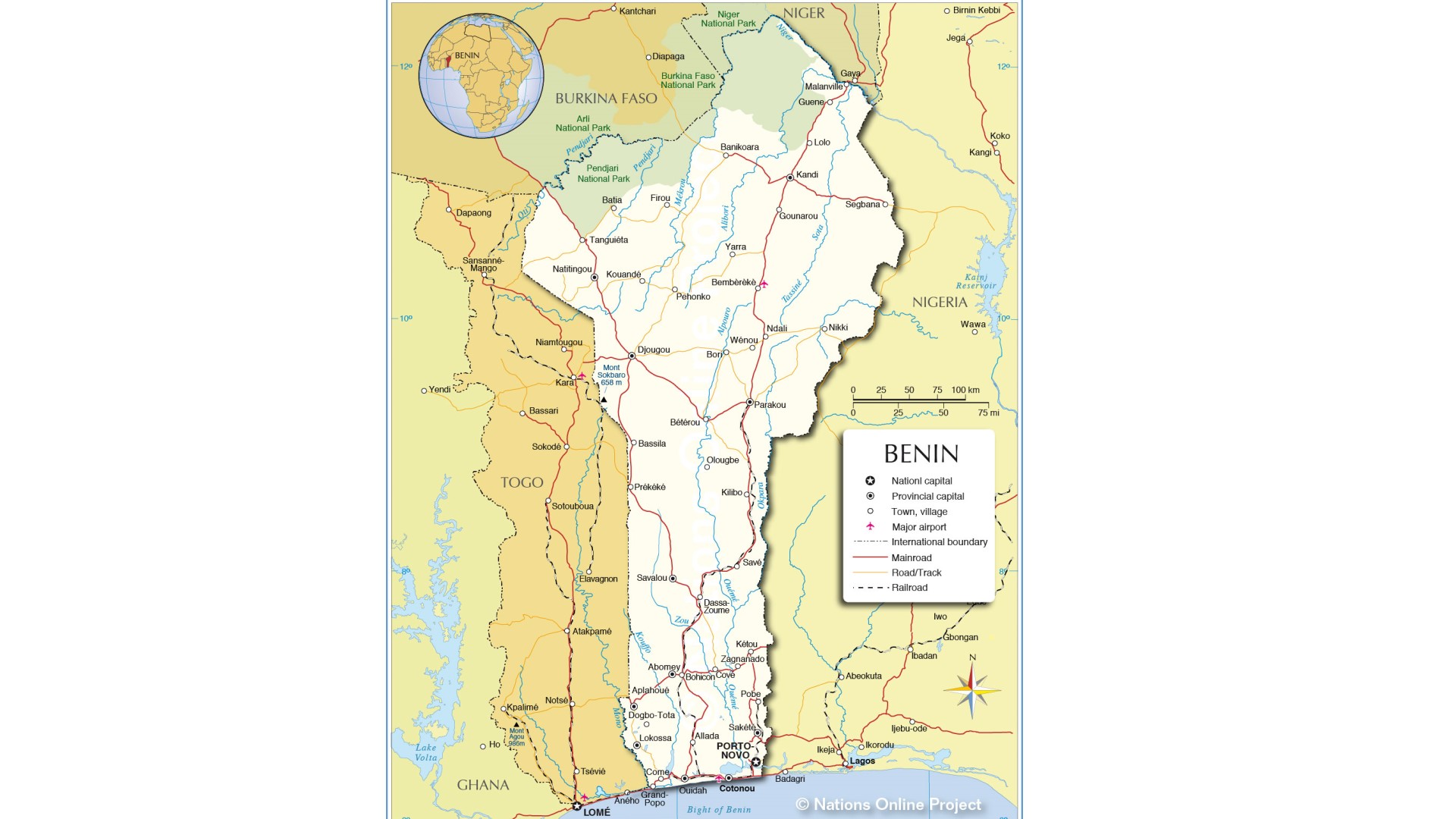
Sheer Scale and Market Dominance: With a nominal GDP of roughly $390 billion (2023), Nigeria is the largest economy in Africa. Its market acts as a magnet for regional trade and investment. Nigerian consumer goods, media (Nollywood), and music are ubiquitous across the continent, fostering a form of soft power. The Nigerian Stock Exchange is among the continent’s largest. This economic mass creates interdependence, where shocks in Nigeria ripple across the region, particularly in neighboring countries like Niger, Benin, and Chad, which rely on informal trade and Nigeria’s ports.
-
The Leadership Role in ECOWAS: Nigeria was a founding and principal financier of the Economic Community of West African States (ECOWAS) in 1975. It has consistently bankrolled the organization, contributing over 50% of its annual budget historically. Nigeria was the driving force behind key integration protocols, most notably the ECOWAS Trade Liberalization Scheme (ETLS) and the conceptual push for a single currency, the Eco (though recent tensions with Francophone states have complicated this). Nigerian capital, through conglomerates like Dangote, BUA, and banks such as UBA and Access Bank, has a massive presence regionally, driving integration from the private sector.
-
Structural Vulnerabilities and Contradictions: Nigeria’s economic prowess is undercut by profound weaknesses:
-
Monoculture & Volatility: The economy remains dangerously dependent on hydrocarbons, which account for ~80% of exports and over 50% of government revenue. This makes it susceptible to global oil price shocks, which in turn destabilize its fiscal capacity to act regionally.
-
De-industrialization and Informal Trade: A weak manufacturing base limits the value-added goods it can offer the region. Conversely, its protectionist policies often fuel a massive informal cross-border trade that deprives the state of revenue but sustains local economies across borders.
-
Macroeconomic Instability: Chronic issues—double-digit inflation (33.2% as of March 2024), a volatile and sometimes artificially managed Naira, mounting debt servicing costs, and severe energy insecurity (perennial grid collapses)—undermine its economic credibility as a model. Poverty incidence (63%) and unemployment are staggeringly high.
-
The “Jollof War” Paradox: Nigeria’s economic size often breeds resentment, perceived as a domineering force that protects its own markets while expecting access to others.
3. The Political-Security Pillar: Hegemon, Peacekeeper, and Sometimes Bully
Nigeria’s political influence is exercised through institutional, military, and diplomatic channels, with mixed results.
-
Foundational Hegemon of ECOWAS: Nigeria’s political clout is institutionalized within ECOWAS. Its capital, Abuja, hosts the ECOWAS Secretariat, symbolizing its centrality. Nigerian diplomats and elites have historically shaped the community’s norms, particularly its pivotal shift in the 1990s towards promoting democracy and constitutional order, enshrined in the 2001 ECOWAS Protocol on Democracy and Good Governance.
-
Security Provider: Nigeria has been the principal military and financial backbone of regional security initiatives. It contributed the bulk of troops and funding to ECOMOG, the ECOWAS peacekeeping force that intervened in the civil wars in Liberia (1990s) and Sierra Leone. More recently, it is the lead force in the multinational joint task force (MNJTF) against Boko Haram in the Lake Chad Basin and provides the backbone for ECOWAS military planning. This role accrues influence but also comes at a high cost in blood and treasure for Nigeria.
-
Diplomatic Leverage and “Big Brother” Complex: Nigeria leverages its size to mediate crises, from Côte d’Ivoire’s civil conflict to The Gambia’s 2017 constitutional standoff, where its military threat was key to enforcing ECOWAS’s will. However, this “Big Brother” role can tip into perceived bullying. The decision by former President Muhammadu Buhari to close land borders for extended periods (2019-2020) for economic reasons caused severe hardship for neighboring economies, highlighting a unilateralist streak.
-
The 2023-2024 Niger Crisis: A Hegemon Diminished? The response to the 2023 coup in Niger exposed the limits of Nigeria’s power. As ECOWAS Chair, President Bola Tinubu threatened military intervention and enacted harsh sanctions. However, domestic public opinion was overwhelmingly opposed to war, Nigeria’s own military is overstretched internally, and the threat was openly defied by the Niger junta and its new Sahel allies (Mali, Burkina Faso, all suspended from ECOWAS). The eventual backdown and the announcement by the three junta-led states of their intention to quit ECOWAS altogether marks a significant blow to the organization and to Nigeria’s authority as a regional enforcer.
4. The Internal Determinants: How Domestic Politics Constrain Regional Power
Nigeria’s regional status cannot be divorced from its internal condition.
-
The “Crippled Giant” Syndrome: Pervasive insecurity—from Boko Haram and ISWAP in the Northeast, to rampant banditry in the Northwest, separatist agitations in the Southeast, and farmer-herder conflicts in the Middle Belt—consumes military resources and political attention. A hegemon struggling to secure its own territory has diminished bandwidth and credibility to secure the region.
-
Political Legitimacy and Governance: Repeated flawed elections, though culminating in peaceful transfers of power, and endemic corruption (ranking 145/180 on Transparency International’s 2023 CPI) weaken Nigeria’s moral authority to champion democracy and good governance abroad. The “do as I say, not as I do” perception erodes its soft power.
-
Economic Distress as a Priority: With a cost-of-living crisis and mounting debt, the Nigerian public and political class are increasingly inward-focused. The political cost of spending on regional projects or military interventions abroad is now prohibitively high, as evidenced during the Niger crisis.
5. Conclusion: An Indispensable but Embattled Hegemon
Nigeria’s status in West Africa is that of an indispensable but embattled colossus. Its economic mass, institutional embeddedness in ECOWAS, and security contributions make it the undisputed center of gravity in the sub-region. No regional solution—whether to economic integration, security crises, or political instability—can be forged without Nigeria’s involvement or acquiescence.
However, its hegemony is increasingly “leaky” and contested. Structural economic weakness, profound domestic security challenges, and occasional unilateralism limit its effectiveness and fuel resentment. The 2023-2024 standoff with Niger’s junta and the potential fracturing of ECOWAS represent a pivotal moment, revealing that the costs of coercive hegemony now outweigh Nigeria’s capacity to enforce it.
The future of Nigeria’s regional status hinges on its ability to address its internal contradictions. A more stable, economically diversified, and democratically robust Nigeria would be a naturally benevolent and effective leader. Until then, it will remain a powerful but paradoxical force—the giant upon whose back the region rests, but whose own unsteady footing threatens the stability of all.
References
-
Adebajo, A. (2017). The Eagle and the Springbok: Nigeria and South Africa as Contending Hegemons. Cambridge University Press.
-
Bach, D. C. (2016). Regionalism in Africa: Genealogies, Institutions and Trans-State Networks. Routledge.
-
ECOWAS Commission. (Various). Annual Reports and Protocols.
-
International Monetary Fund (IMF). (2024). World Economic Outlook Database.
-
Nwanma, V. (2023). “Nigeria’s Border Closure and its Impact on Regional Trade.” Journal of West African Affairs.
-
Obasanjo, O., & Mabogunje, A. (Eds.). (2012). Elements of Development: The Nigerian Case. Safari Books.
-
Premium Times, Reuters, BBC Africa. (2023-2024). Reporting on the Niger Coup and ECOWAS Response.
-
Transparency International. (2023). Corruption Perceptions Index.
-
World Bank. (2024). Nigeria Development Updates and World Development Indicators.